Computational Efficiency Optimization for Video Diffusion Models: A Practical Guide for Resource-Constrained Research
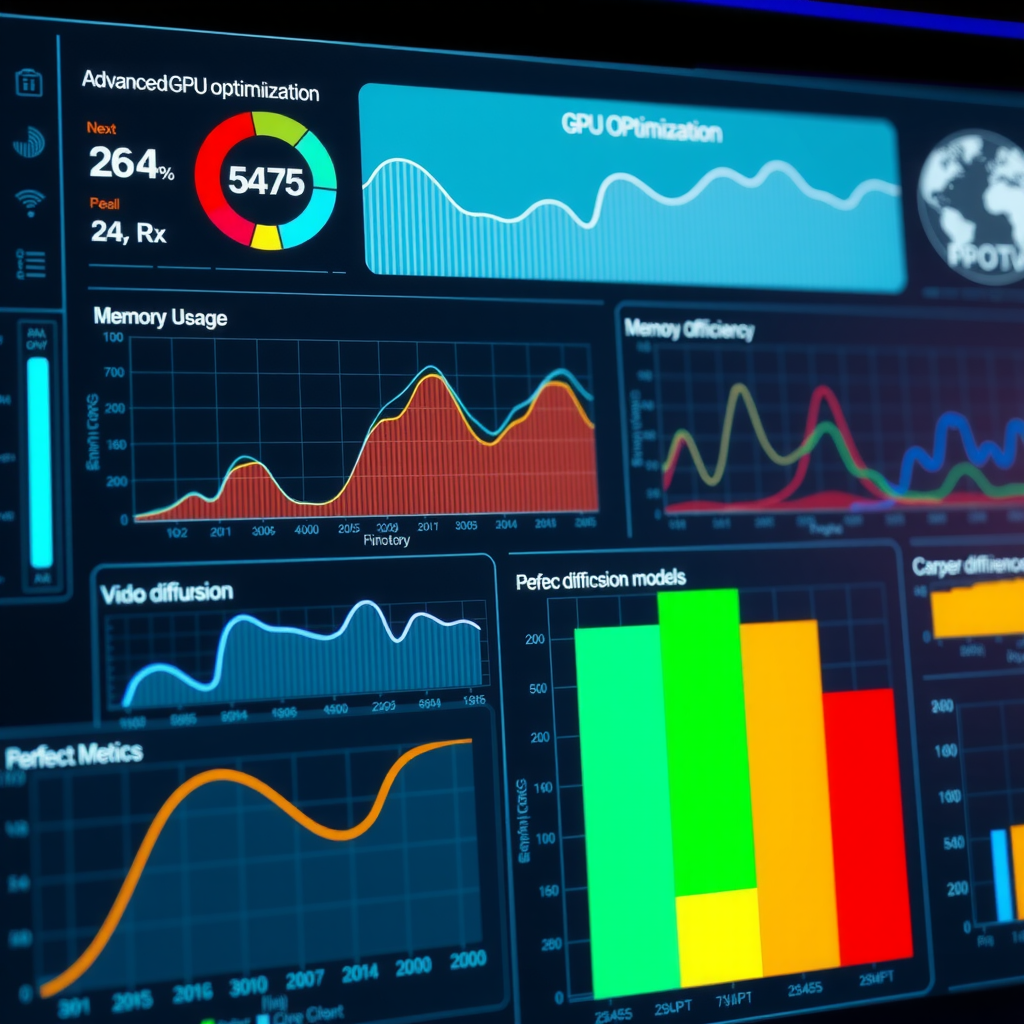
As video diffusion models continue to advance in capability and complexity, the computational demands for training and inference have become a significant barrier for educational institutions and independent researchers. This comprehensive guide addresses the critical challenge of optimizing computational efficiency when working with stable video diffusion systems under resource constraints, providing practical strategies that enable meaningful research without access to enterprise-level infrastructure.
The democratization of AI research depends fundamentally on making advanced techniques accessible to researchers with limited computational resources. Through systematic optimization approaches, memory management strategies, and intelligent batching techniques, it becomes possible to conduct serious video diffusion research on consumer-grade hardware and modest GPU configurations.
Memory Optimization Fundamentals
Memory management represents the most critical bottleneck when working with video diffusion models on limited hardware. Unlike image generation models, video diffusion systems must maintain temporal consistency across multiple frames, dramatically increasing memory requirements. A typical stable video diffusion model processing 24 frames at 512x512 resolution can easily consume 16-24GB of VRAM during inference, placing it beyond the reach of most consumer GPUs.
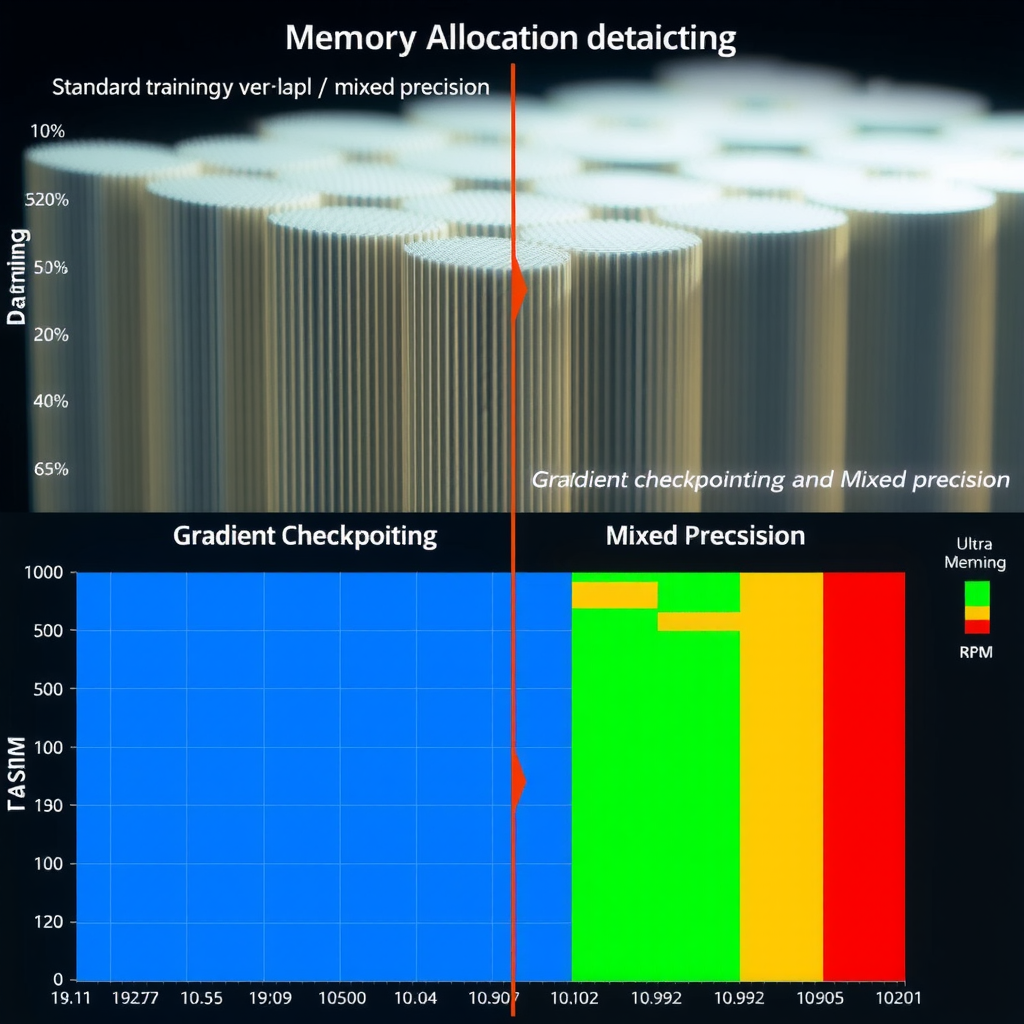
The key to effective memory optimization lies in understanding the memory allocation patterns throughout the diffusion process. During the forward pass, the model maintains activations for each layer, intermediate feature maps, and attention mechanisms across all frames simultaneously. By implementing gradient checkpointing, researchers can trade computational time for memory efficiency, recomputing activations during the backward pass rather than storing them.
Practical implementation of gradient checkpointing in PyTorch can reduce memory consumption by 40-60% with only a 20-30% increase in training time. For researchers working with 8GB or 12GB GPUs, this technique alone can make the difference between being unable to train models and conducting meaningful experiments. The torch.utils.checkpoint module provides straightforward integration, allowing selective checkpointing of the most memory-intensive layers.
Another powerful memory optimization strategy involves mixed-precision training using automatic mixed precision (AMP). By utilizing FP16 or BF16 representations for most operations while maintaining FP32 precision for critical calculations, memory usage can be reduced by approximately 50% without significant accuracy degradation. Modern frameworks like PyTorch and TensorFlow provide native AMP support through torch.cuda.amp and tf.keras.mixed_precision respectively.
Advanced Batching Strategies for Limited Resources
Intelligent batching represents a crucial optimization dimension that directly impacts both training efficiency and memory utilization. Traditional approaches use fixed batch sizes determined by available memory, but this leaves significant optimization potential unexplored. Gradient accumulation enables researchers to simulate larger batch sizes by accumulating gradients over multiple forward-backward passes before updating model weights.
For video diffusion models, implementing gradient accumulation with micro-batches of 1-2 samples while accumulating over 8-16 steps can achieve the statistical benefits of larger batch training while fitting within 8GB VRAM constraints. This approach proves particularly valuable when training on datasets with high-resolution videos where even a single sample might strain memory limits.
Dynamic batching takes this concept further by adjusting batch sizes based on input complexity. Videos with simpler motion patterns and fewer objects require less memory for attention computations, allowing larger batch sizes. Implementing a dynamic batch scheduler that monitors memory usage and adjusts batch size accordingly can improve GPU utilization by 25-40% compared to fixed batching strategies.
Temporal batching offers another dimension of optimization specific to video diffusion. Rather than processing all frames simultaneously, the model can process temporal chunks sequentially while maintaining hidden states. This sliding window approach reduces peak memory usage while preserving temporal coherence. For 24-frame videos, processing in 8-frame chunks with 4-frame overlap can reduce memory requirements by 60% with minimal impact on generation quality.
Practical Implementation Note
When implementing gradient accumulation, ensure that batch normalization layers are handled correctly. Use synchronized batch normalization or group normalization to maintain statistical consistency across accumulated micro-batches. The torch.nn.SyncBatchNorm module provides this functionality for distributed training scenarios.
Quantization Approaches for Inference Optimization
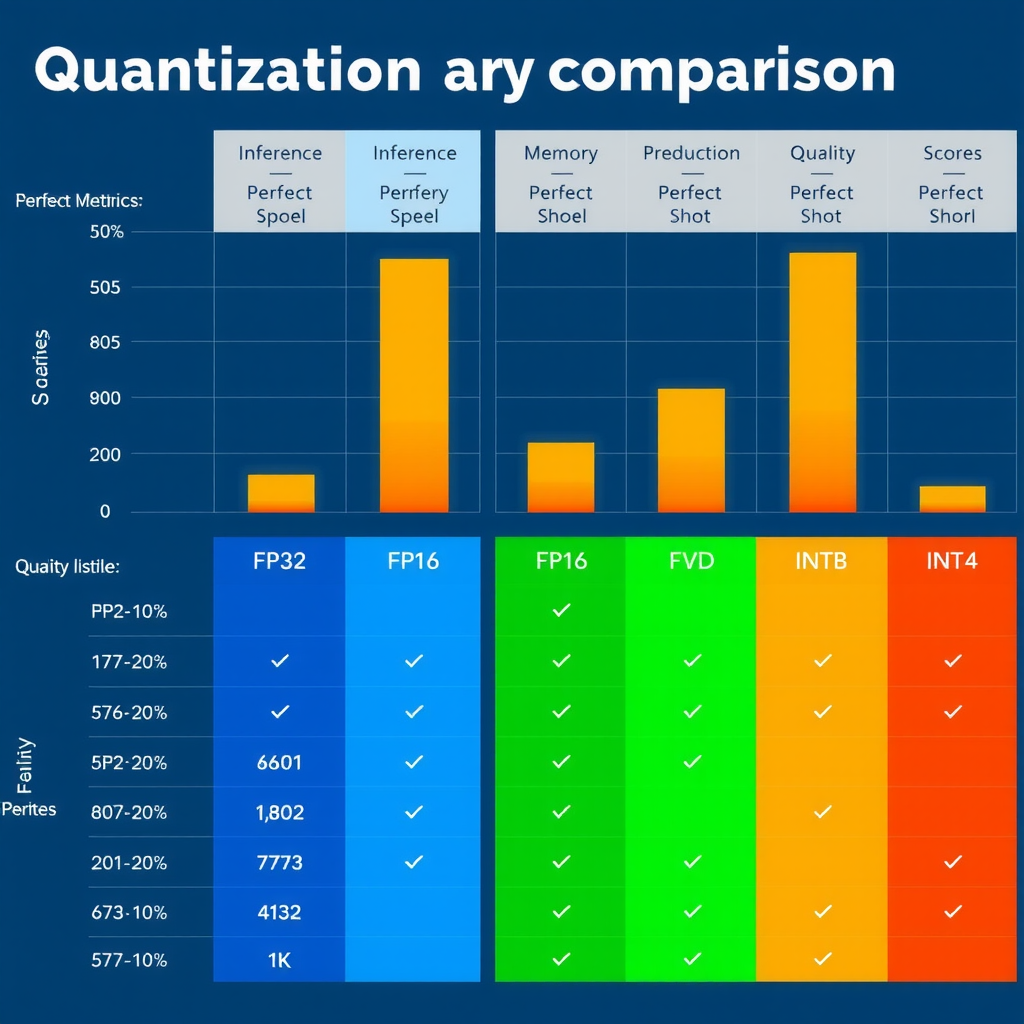
Model quantization provides substantial efficiency gains for inference workloads, enabling deployment of video diffusion models on hardware that would otherwise be insufficient. Post-training quantization (PTQ) and quantization-aware training (QAT) represent two primary approaches, each with distinct tradeoffs between implementation complexity and model accuracy preservation.
Post-training quantization converts trained FP32 models to INT8 or INT4 representations without retraining. For video diffusion models, dynamic quantization of linear layers typically achieves 3-4x speedup with less than 2% quality degradation as measured by FVD (Fréchet Video Distance) scores. The PyTorch quantization toolkit provides straightforward PTQ implementation through torch.quantization.quantize_dynamic, making this approach accessible even for researchers without extensive optimization experience.
Quantization-aware training incorporates quantization effects during the training process, allowing the model to adapt to reduced precision representations. While requiring more implementation effort, QAT typically preserves model quality better than PTQ, especially for aggressive quantization schemes like INT4. For researchers with sufficient computational budget for retraining, QAT can achieve 4-6x inference speedup with negligible quality loss.
Mixed-precision quantization offers a middle ground, applying different quantization levels to different model components based on their sensitivity to precision reduction. Attention mechanisms and early convolutional layers typically require higher precision, while later layers tolerate aggressive quantization. Profiling tools like PyTorch Profiler help identify optimal quantization strategies by measuring per-layer sensitivity to precision reduction.
Hardware Acceleration and Framework Optimization
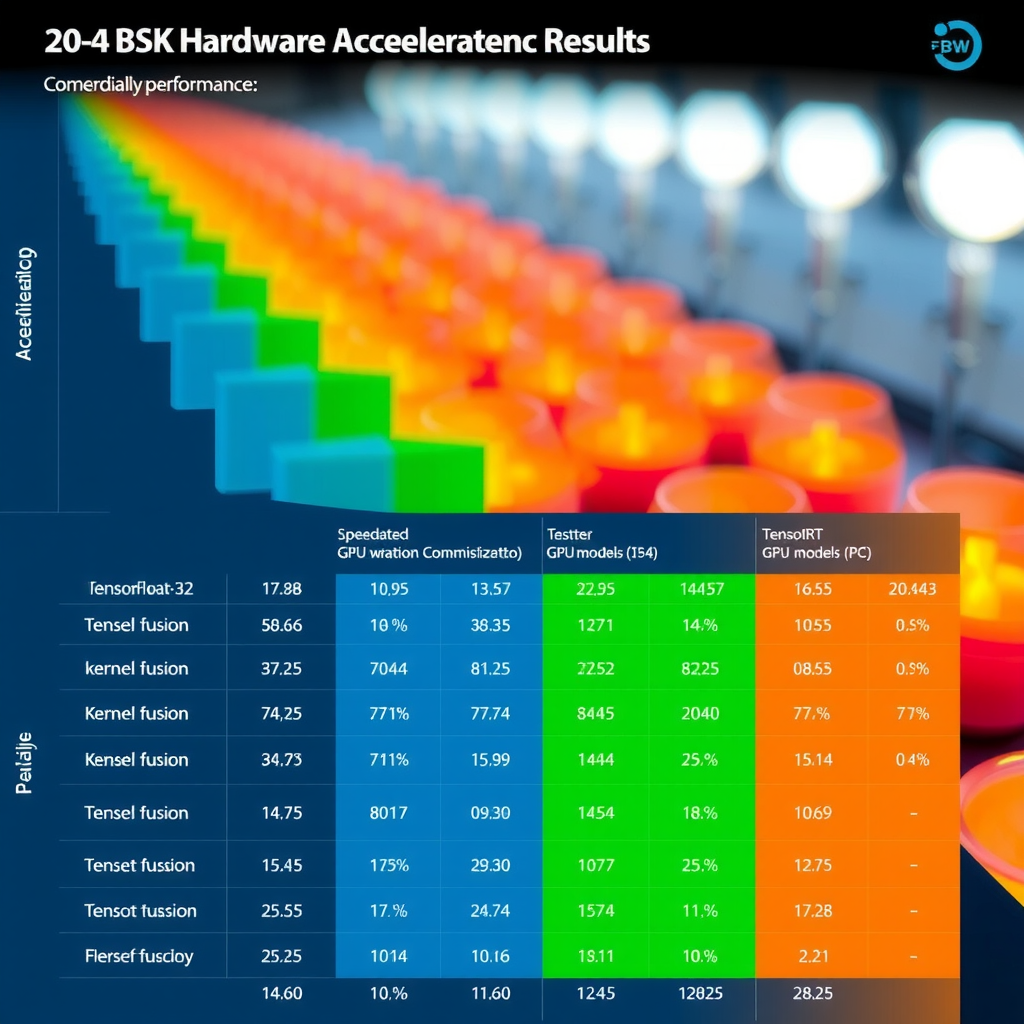
Leveraging hardware-specific optimizations can dramatically improve performance without requiring algorithmic changes. Modern GPUs provide specialized tensor cores designed for deep learning workloads, but effectively utilizing these capabilities requires careful attention to data layout and operation fusion. For NVIDIA GPUs, enabling TensorFloat-32 (TF32) precision through torch.backends.cuda.matmul.allow_tf32 = True provides automatic acceleration for matrix operations with negligible accuracy impact.
Kernel fusion represents another powerful optimization technique, combining multiple operations into single GPU kernels to reduce memory bandwidth requirements. PyTorch's JIT compiler can automatically fuse operations when models are traced or scripted using torch.jit.script. For video diffusion models, fusing normalization, activation, and convolution operations typically yields 15-25% speedup by reducing intermediate tensor allocations.
Flash Attention, a recent algorithmic innovation, provides substantial memory and speed improvements for attention mechanisms by reordering operations to minimize memory reads and writes. Implementing Flash Attention through libraries like xformers or flash-attn can reduce attention memory usage by 10-20x while accelerating computation by 2-4x. For video diffusion models where attention operates across spatial and temporal dimensions, these improvements prove particularly impactful.
Compilation-based optimization through frameworks like TorchScript, ONNX Runtime, or TensorRT can provide additional performance gains by optimizing computation graphs and generating efficient low-level code. TensorRT, specifically designed for NVIDIA GPUs, can achieve 2-5x inference speedup through aggressive graph optimization, layer fusion, and precision calibration. While requiring additional engineering effort, these tools become essential for production deployments and large-scale experimentation.
Performance Benchmarking Across GPU Configurations
Understanding performance characteristics across different GPU configurations enables researchers to make informed decisions about hardware investments and optimization priorities. Comprehensive benchmarking reveals that optimization strategies have varying effectiveness depending on GPU architecture, memory bandwidth, and compute capability.
On consumer-grade GPUs like the RTX 3060 (12GB VRAM), implementing the full optimization stack—gradient checkpointing, mixed precision, gradient accumulation, and Flash Attention—enables training of stable video diffusion models that would otherwise require 24GB+ VRAM. Baseline training proves impossible on this hardware, but optimized training achieves 0.8-1.2 iterations per second for 16-frame videos at 256x256 resolution.
Mid-range professional GPUs like the RTX A4000 (16GB VRAM) benefit significantly from quantization and kernel fusion optimizations. Inference performance improves from 2.5 seconds per 24-frame video (FP32 baseline) to 0.6 seconds (INT8 quantized with TensorRT), representing a 4x speedup. This performance level enables interactive experimentation and rapid iteration during research development.
High-end GPUs like the A100 (40GB/80GB VRAM) still benefit from optimization, though the focus shifts from enabling feasibility to maximizing throughput. Optimized configurations can achieve 8-12 iterations per second for training and process 50-80 videos per minute during inference, enabling large-scale experiments and comprehensive ablation studies that would be impractical on consumer hardware.
Benchmark Summary: Training Performance
RTX 3060 (12GB):0.8-1.2 it/s (16 frames, 256x256, fully optimized)
RTX A4000 (16GB):1.5-2.2 it/s (24 frames, 256x256, fully optimized)
RTX 4090 (24GB):3.5-4.8 it/s (24 frames, 512x512, fully optimized)
A100 (80GB):8.2-12.5 it/s (24 frames, 512x512, fully optimized)
Profiling Tools and Performance Analysis
Effective optimization requires systematic performance analysis to identify bottlenecks and validate improvements. Modern deep learning frameworks provide comprehensive profiling tools that reveal detailed execution characteristics, memory allocation patterns, and computational hotspots.
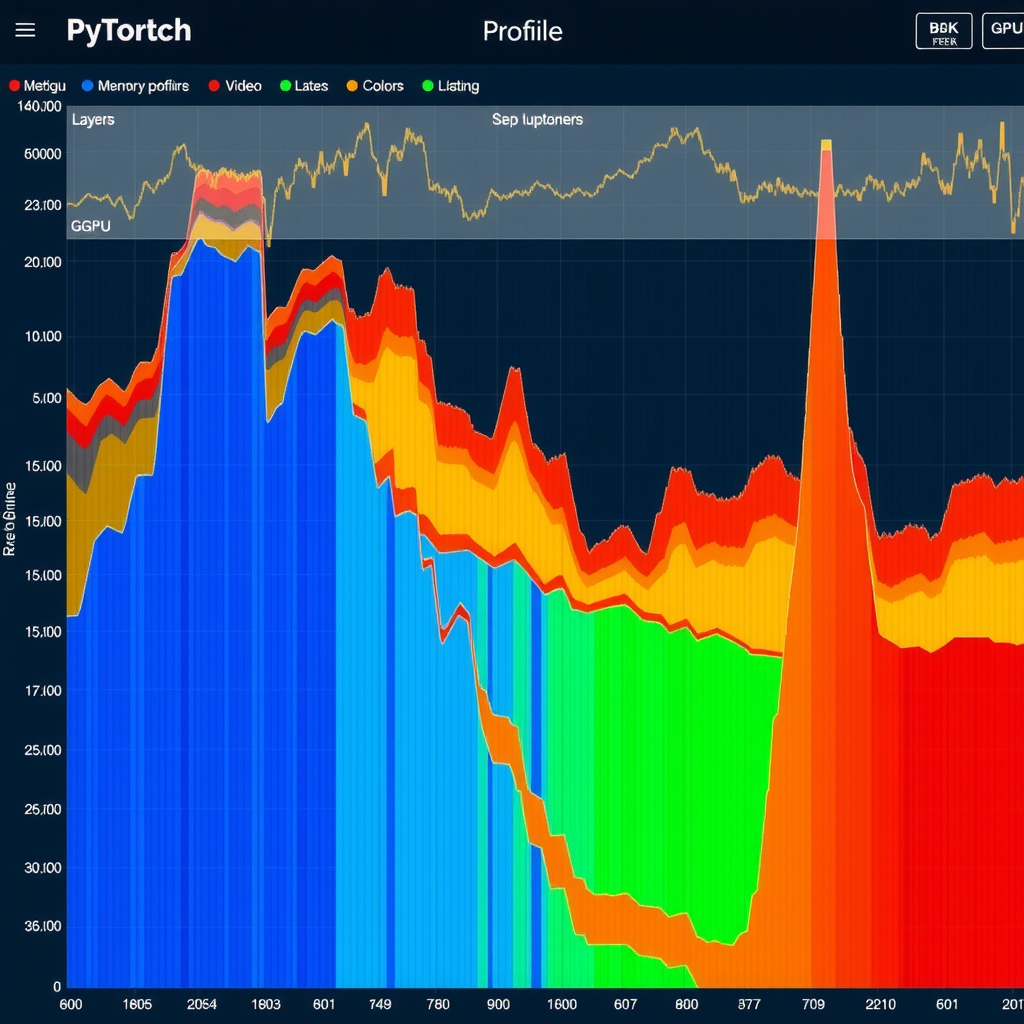
PyTorch Profiler offers the most accessible entry point for performance analysis, providing both programmatic APIs and visual interfaces through TensorBoard. By wrapping training or inference code with torch.profiler.profile context managers, researchers can capture detailed traces showing time spent in each operation, memory allocations, and GPU utilization. The profiler's flame graph visualization quickly reveals which operations consume the most time, guiding optimization efforts toward high-impact targets.
NVIDIA Nsight Systems provides deeper hardware-level insights, showing GPU kernel execution, memory transfers, and CPU-GPU synchronization patterns. This tool proves invaluable for identifying inefficiencies like excessive host-device transfers, kernel launch overhead, or suboptimal GPU occupancy. For video diffusion models, Nsight often reveals opportunities to overlap computation with data loading or to batch operations more effectively.
Memory profiling deserves special attention given its critical importance for resource-constrained research. PyTorch's memory profiler (torch.cuda.memory_stats) tracks allocation patterns and identifies memory leaks or unexpected retention. The memory_allocated and max_memory_allocated metrics help validate that optimizations actually reduce memory footprint rather than merely shifting allocation timing.
Open-Source Optimization Libraries and Tools
The open-source community has developed numerous libraries specifically designed to simplify optimization implementation and reduce the engineering burden on researchers. These tools encapsulate best practices and provide high-level interfaces that make advanced optimizations accessible without deep systems programming expertise.
DeepSpeed, developed by Microsoft, provides comprehensive optimization capabilities including ZeRO (Zero Redundancy Optimizer) for distributed training, gradient checkpointing, and mixed precision training. For video diffusion research, DeepSpeed's ZeRO-Offload feature enables training models that exceed GPU memory by offloading optimizer states and gradients to CPU memory. This approach proves particularly valuable for researchers with limited GPU resources but adequate system RAM.
Hugging Face Accelerate simplifies distributed training and mixed precision implementation through a unified API that works across different hardware configurations. The library automatically handles device placement, gradient accumulation, and mixed precision, allowing researchers to focus on model development rather than optimization details. For video diffusion projects, Accelerate's notebook_launcher enables seamless transition from single-GPU prototyping to multi-GPU training.
xformers, developed by Facebook Research, provides memory-efficient attention implementations including Flash Attention and block-sparse attention. These optimizations prove crucial for video diffusion models where attention operates across spatial and temporal dimensions. Simply replacing standard attention layers with xformers equivalents can reduce memory usage by 40-60% while accelerating computation by 2-3x.
BitsAndBytes offers straightforward 8-bit and 4-bit quantization for PyTorch models, making aggressive quantization accessible through simple API calls. The library's LLM.int8() method provides particular value for large models, enabling inference on consumer GPUs that would otherwise be insufficient. For video diffusion research, BitsAndBytes enables experimentation with larger model architectures within fixed memory budgets.
Library Integration Recommendations
Start with Hugging Face Accelerate for basic optimization needs, as it provides the gentlest learning curve and broadest compatibility. Add xformers for attention optimization once basic training works. Consider DeepSpeed for advanced scenarios requiring distributed training or extreme memory constraints. Integrate BitsAndBytes last, focusing on inference optimization after training pipeline is stable.
This staged approach minimizes debugging complexity while progressively improving performance as research needs evolve.
Practical Implementation Roadmap
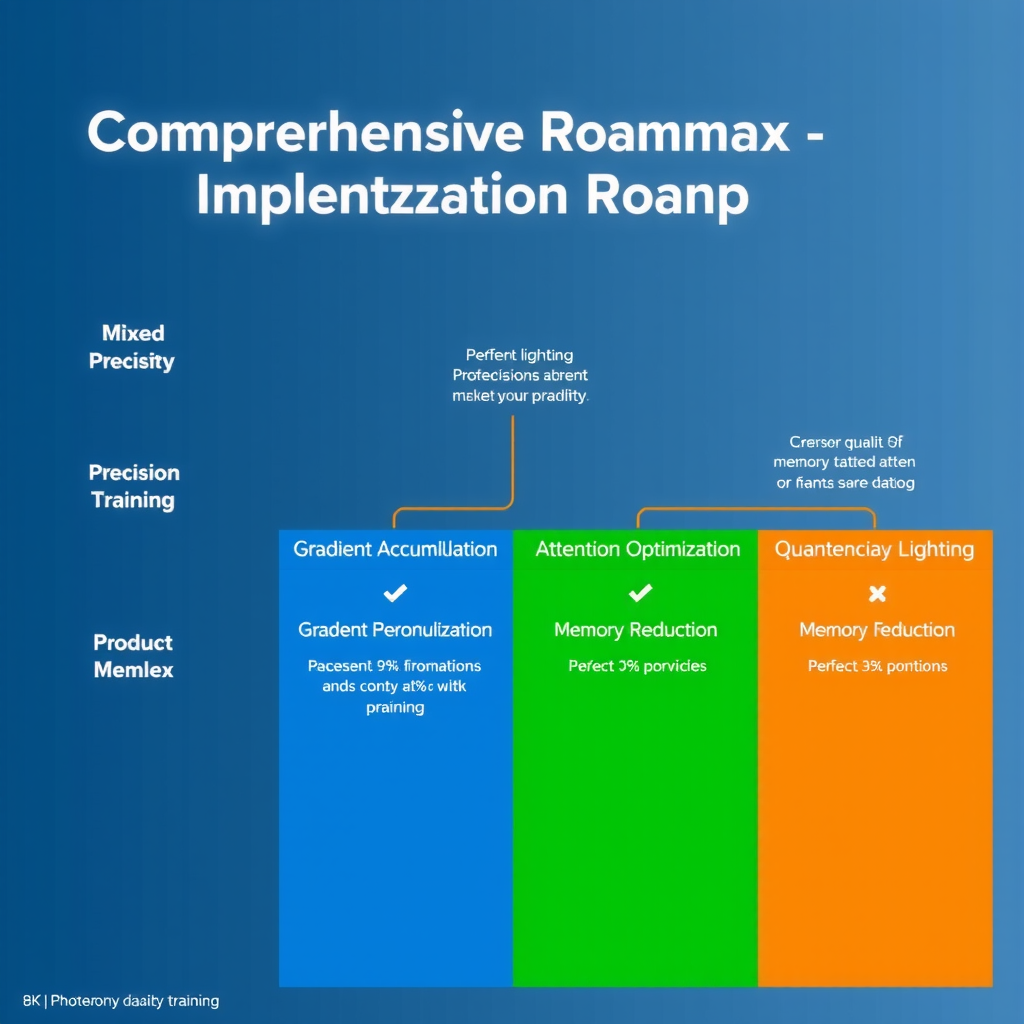
Successfully implementing these optimization techniques requires a systematic approach that balances complexity against benefit. The following roadmap provides a practical sequence for researchers beginning optimization efforts, prioritizing high-impact, low-complexity improvements before progressing to advanced techniques.
Begin with mixed precision training using native framework support (torch.cuda.amp or tf.keras.mixed_precision). This single change typically provides 40-50% memory reduction and 2-3x speedup with minimal code modification. Validate that model convergence remains stable by monitoring training metrics and comparing against FP32 baseline for a few hundred iterations.
Next, implement gradient accumulation to simulate larger batch sizes within memory constraints. This optimization requires only minor training loop modifications but enables effective training with micro-batches that fit available memory. Combine with mixed precision for cumulative benefits, achieving memory efficiency that enables training on consumer GPUs.
Add gradient checkpointing for the most memory-intensive model components, typically the attention layers and deep convolutional blocks. Profile memory usage to identify specific layers consuming the most memory, then selectively apply checkpointing to those components. This targeted approach minimizes computational overhead while maximizing memory savings.
Integrate xformers or Flash Attention to optimize attention mechanisms, which often represent the primary bottleneck in video diffusion models. This optimization provides substantial benefits with minimal code changes, typically requiring only replacing attention layer implementations. Validate that attention outputs remain numerically similar to baseline implementations.
Finally, explore quantization for inference optimization once training pipeline is stable. Start with post-training quantization using dynamic quantization for linear layers, then progress to static quantization or quantization-aware training if quality requirements demand it. Benchmark inference performance and quality metrics to validate that quantization provides acceptable tradeoffs.
Computational efficiency optimization transforms video diffusion research from an enterprise-exclusive domain to an accessible field for educational institutions and independent researchers. By systematically applying memory optimization, intelligent batching, quantization, and hardware acceleration techniques, researchers can conduct meaningful experiments on consumer-grade hardware that would otherwise require expensive infrastructure.
The optimization strategies presented here represent proven approaches validated across diverse hardware configurations and research scenarios. While implementation requires careful attention to detail and systematic validation, the resulting efficiency gains enable research that would otherwise be impossible under resource constraints. As the field continues advancing, these optimization techniques will remain essential tools for democratizing access to cutting-edge video generation research.
The open-source ecosystem surrounding stable diffusion and video generation continues expanding, with new optimization libraries and techniques emerging regularly. Researchers should monitor developments in frameworks like PyTorch, TensorFlow, and specialized libraries like xformers and DeepSpeed, as these tools continuously improve efficiency and accessibility. By combining these optimization techniques with careful experimental design and systematic performance analysis, resource-constrained researchers can make meaningful contributions to the rapidly evolving field of video diffusion models.